What does the Liver do?
The liver is a vital organ that performs hundreds of essential functions to keep the body healthy. The liver:
- Filters Blood and Removes Toxins: The liver processes all the blood coming from the digestive tract, removing toxins, waste products, and harmful substances like drugs and alcohol before the blood circulates to the rest of the body. This protects other organs and prevents toxic or harmful things from harming the body. 1 3
- Produces Bile: The liver produces bile, a fluid essential for digesting and absorbing fats in the small intestine.In addition to aiding fat digestion, bile helps the body absorb fat-soluble vitamins—A, D, E, and K. It also plays a key role in waste removal by carrying excess cholesterol and bilirubin from the liver to be excreted in feces. 2 3
- Regulates Blood Sugar: The liver manages blood sugar levels by converting excess glucose into glycogen for storage and releasing it back into the bloodstream as needed for energy. This stabilizing action helps prevent blood sugar spikes and crashes, supporting sustained energy. 2 3
- Synthesizes Proteins: The liver produces important proteins for blood plasma, including those needed for blood clotting and for transporting hormones, vitamins, and enzymes. These proteins are critical for circulatory health and hormone signaling. 2 3
- Stores Nutrients: The liver stores vitamins (A, D, E, K, B12), minerals (iron, copper), and releases them when the body needs them. This reservoir function ensures that the body has access to essential micronutrients between meals. 3
- Metabolizes Fats and Cholesterol: The liver breaks down fats, produces cholesterol, and creates proteins that help transport fats throughout the body. Proper fat metabolism supports cardiovascular health and balanced hormones. 2
- Processes Drugs and Chemicals: The liver metabolizes medications and chemicals, making them easier for the body to use or excrete. This detox process helps remove dangerous chemicals that could otherwise harm tissues and cells. 2
- Immune Function: The liver plays a vital role in immunity by filtering blood and producing immune factors, including proteins that activate Natural Killer (NK) cells to destroy harmful pathogens. At the same time, it helps maintain a critical balance between immune activation and tolerance—supporting defense against infection while preventing unnecessary inflammation.
- Regulates Blood Clotting: The liver produces substances necessary for proper blood clotting, which depend on vitamin K absorption facilitated by bile. 2 3 Clotting proteins are essential for the body to stop bleeding and allow healing.
- Breaks Down Old Blood Cells: The liver processes hemoglobin from old red blood cells, storing and reusing the iron content. This recycling conserves key resources and keeps the blood healthy. 2
Overall, the liver is indispensable for metabolism, digestion, detoxification, blood regulation, and immune defense. Without a properly functioning liver, the body cannot survive. Therefore, maintaining a healthy liver is extremely important.
The Growing Liver Health Crisis in U.S. Adults
Prevalence of Fatty Liver Disease in US Adults
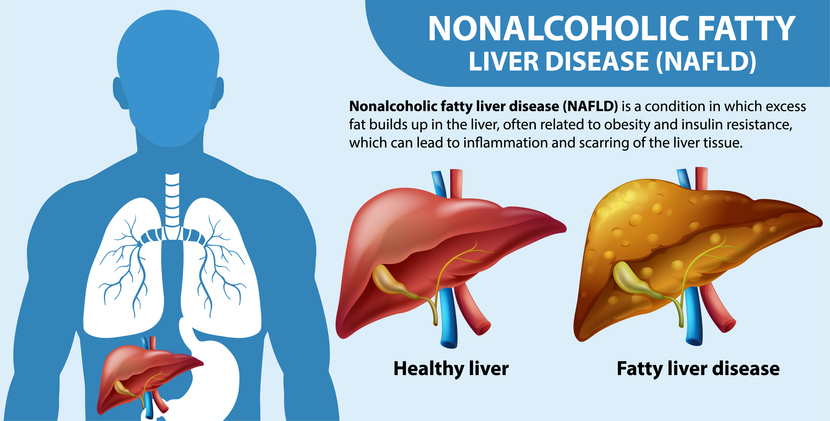
Nonalcoholic fatty liver disease (NAFLD) is highly prevalent in the US adult population. Current estimates, based largely on imaging studies rather than liver biopsy, indicate that approximately 24% to 30% of US adults are affected by NAFLD. That is about 1 in 3 people have an unhealthy liver; and most of them don’t know. This makes liver disease one of the most common chronic health conditions in the country. We can each do something to counter that risk: use a DHEA supplement cream.
Why Fatty Liver Disease is So Common
The high prevalence of fatty liver disease in the US is closely linked to rising rates of obesity, metabolic syndrome, type 2 diabetes, and other lifestyle-related factors. Obesity is a major risk factor, as excess body weight contributes to insulin resistance and abnormal fat accumulation in the liver. Additional contributors include poor diet, sedentary lifestyle, and associated metabolic disturbances. As modern lifestyles continue to trend in this direction, liver disease rates are expected to rise even further.
DHEA Supplementation and Fatty Liver Disease
The Connection Between DHEA and Liver Function:
DHEA (dehydroepiandrosterone) is a prohormone produced by the adrenal glands and liver, and its levels gradually decline with age. Low levels of DHEA are linked to inflammation, poor liver function, and various metabolic disorders.
Medical research on DHEA and liver health suggest that supplementation may help:
- Reduce liver fat accumulation (steatosis)
- Improve insulin sensitivity
- Lower inflammation and oxidative stress in the liver.
DHEA also appears to influence hormones like cortisol, leptin, and adiponectin, which affect fat metabolism and inflammation.
By inhibiting enzymes involved in fat synthesis, reducing weight gain, and modulating growth factor levels, DHEA may help protect the liver from fat buildup. Lower DHEA-S levels in humans are associated with more advanced stages of NAFLD. Supplementation may reduce oxidative damage and fibrosis in the liver.
For adults over 35, these findings suggest that DHEA may be a natural way to support liver health. As part of a complete wellness routine, bioidentical DHEA cream like Twist 25 can work along with a healthy diet and regular exercise to help maintain health supporting hormone and metabolic balance.
What is DHEA?
DHEA stands for dehydroepiandrosterone. DHEA is the most abundant pro-hormone naturally produced in the human body. DHEA is not a synthetic or foreign substance—the human body makes DHEA naturally throughout our lives.
This article describes how DHEA works and what medical research is showing us about how DHEA provides many benefits for the liver. For people 35 and up, Twist 25 DHEA cream offers a great way to maintain healthy hormone levels supporting liver health and cardiovascular health, and enjoy associated physical and emotional benefits.
DHEA was first identified in 1931 by Nobel Prize-winning chemist Dr. Adolf Butenandt. Often called the “anti-aging hormone,” DHEA serves as the foundation for more than 50 hormones that play essential roles in the body. Humans produce DHEA naturally throughout life, starting at birth.
DHEA Levels Over the Human lifespan
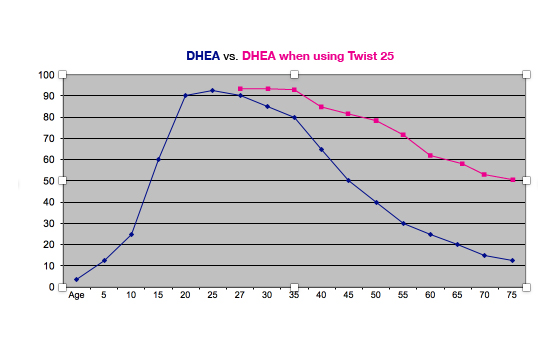
DHEA levels increase from birth through adolescence and puberty, and peak between ages 20 to 25, when we are “in our prime”. After that, DHEA levels gradually decrease by about 2% per year thereafter. By age 35, the body produces roughly 20% less DHEA than it did at 25, and by age 50, that reduction reaches 50%. This steady decline continues with age.
What does DHEA do?
An important function of DHEA is that it serves as a base hormone precursor. DHEA also counterbalances cortisol, the inflammatory response hormone. DHEA also supports the immune system, allowing for a greater number of and activity of natural killer (NK) cells. Low DHEA levels are associated with many diseases of aging, such as cardiovascular disease, cancer, osteoporosis, depression, and dementia. Now, recent medical research is showing DHEA also has many beneficial effects for the liver. DHEA has no dangerous side-effects.
DHEA Benefits the liver: What the Research shows
New medical research findings show there are several ways DHEA (dehydroepiandrosterone) may benefit the liver:
1. Liver Regeneration and Protection. DHEA has been shown to help with liver regeneration and restore liver cell function after liver injury or trauma thereby helping to avoid liver damage. 1
2. Reduction of Liver Steatosis (Fatty Liver). Advanced scientific research shows that DHEA helps reduce harmful fat accumulation in the liver reducing inflammation, and may protect against insulin resistance caused by high fat diets. 2
3. Liver Enzyme Safety DHEA DHEA is considered safe in managing health conditions. It is not a foreign substance. DHEA is the most abundant naturally occurring pro-hormone in the human body. A recent study found that DHEA acts as an inhibitor of G6PD (glucose-6-phosphate dehydrogenase) reducing processes that lead to fat synthesis in the liver to avoid non-alcoholic fatty liver disease. 3
There are no dangerous side effects from using DHEA. Long-term studies of DHEA supplementation have shown numerous beneficial health effects with no adverse effects.
Reasons to Use DHEA Supplement Cream Instead of a DHEA Pill
The adrenal glands, gonads, and skin produce and metabolize DHEA, so applying a topical DHEA cream makes more sense than taking DHEA as a pill.
In contrast, when taken orally, the liver quickly eliminates DHEA through the “first-pass effect” or converts it into DHEA-S—a form the body cannot convert back into free DHEA. 11 Free DHEA, however, is the active form that supports hormone production and well-being.
Topical Cream Advantages:
- Avoids liver filtration and strain
- Delivers free DHEA directly into the bloodstream
- Absorbs through the skin—where much of the body’s DHEA is naturally metabolized
For effective delivery, Twist 25 DHEA cream uses a coconut oil base that promotes optimal absorption. Additionally, it supports skin health by aiding collagen formation, regulating sebum production, and protecting against environmental damage.
“In postmenopausal women, all estrogens and most androgens are made locally in peripheral target tissues from the inactive adrenal steroid precursor dehydroepiandrosterone (DHEA). In adult men, approximately 50% of androgens are made locally.” 5
(Labrie F. et al Semin Reprod Med. 2004 Nov;22(4):299-309. Adrenal androgens and intracrinology. Source: Oncology and Molecular Endocrinology Research Center, Laval University Hospital Research Center, Quebec City, Canada. fernand.labrie@crchul.ulaval.ca)
Conclusion: DHEA and Liver Health
DHEA supports liver health by promoting regeneration, reducing fat accumulation, and safely maintaining metabolic balance. Importantly, research shows DHEA is safe for the liver. Additionally, using it in cream form helps avoid placing additional stress on the liver.
Adding Twist 25 DHEA cream to your routine can support liver function, improve energy, and maintain hormonal health—especially as you age.
If you’re looking for a natural way to support your liver, Twist 25 DHEA cream may be a smart, science-backed option.
References
- Cleveland Clinic https://my.clevelandclinic.org/health/articles/21481-liver
- Hopkins Medicine.org https://www.hopkinsmedicine.org/health/conditions-and-diseases/liver-anatomy-and-functions
- ColumbiaSurgery.org https://columbiasurgery.org/liver/liver-and-its-functions
- US News and World Report https://www.usnews.com/news/health-news/articles/2024-11-13/fatty-liver-disease-now-affects-4-in-10-u-s-adults
- VCU Health https://www.vcuhealth.org/news/more-than-40-percent-of-us-adults-have-liver-disease-with-higher-risk-among-hispanics-new-study/
- NBC News https://www.nbcnews.com/health/health-news/nonalcoholic-fatty-liver-disease-rates-are-soaring-know-rcna89623
- PubMed Central. NIH. Journal of the American Medical Association JAMA https://pmc.ncbi.nlm.nih.gov/articles/PMC11742522/
- Takehiko Kitamura, Katsuaki Tanaka, Katsumi Morita, Satoru Saito, Takayoshi Kiba, Kazushi Numata, Hisayiko Sekihara. “Dehydroepiandrosterone (DHEA) facilitates liver regeneration after partial hepatectomy in rats”. Life Sciences journal. Volume 65, Issue 17, 17 September, 1999. Pages 1747-1756. Science Direct https://www.sciencedirect.com/science/article/abs/pii/S0024320599004270
- Reza Hakkak, Andrea Bell, Soheila Korourian. “Dehydroepiandrosterone (DHEA) Feeding Protects Liver Steatosis in Obese Breast Cancer Rat Model”. Scientia Pharmaceutica journal. March 20, 2017; 85(1):13. https://pmc.ncbi.nlm.nih.gov/articles/PMC5388150/
- Hu Chen, Zhao Jin, Changliang Sun, Heitor O Santos, Hamed Kord Varkaneh.
“Effects of dehydroepiandrosterone (DHEA) supplementation on cortisol, leptin, adiponectin, and liver enzyme levels: A systematic review and meta-analysis of randomised clinical trials”. International Journal of Clinical Practice. November 2021; 75(11): e14698. doi: 10.1111/ijcp.14698. https://pubmed.ncbi.nlm.nih.gov/34342920/
- Hammer, Fabian, Subtil s, Lux P, Maser-Gluth C, Stewart P, et al “No Evidence for Hepatic Conversion of Dehydroepiandrosterone (DHEA) Sulfate to DHEA: In Vivo and In Vitro Studies” Journal of Endocrinology and Metabolism. March 8 2005 pp 3600-3605) http://jcem.endojournals.org/content/90/6/3600.full.pdf
- Labrie F. et al Semin Reprod Med. 2004 Nov;22(4):299-309. Adrenal androgens and intracrinology. Source: Oncology and Molecular Endocrinology Research Center, Laval University Hospital Research Center, Quebec City, Canada. fernand.labrie@crchul.ulaval.ca
Related Products
-
 anti-aging supplement
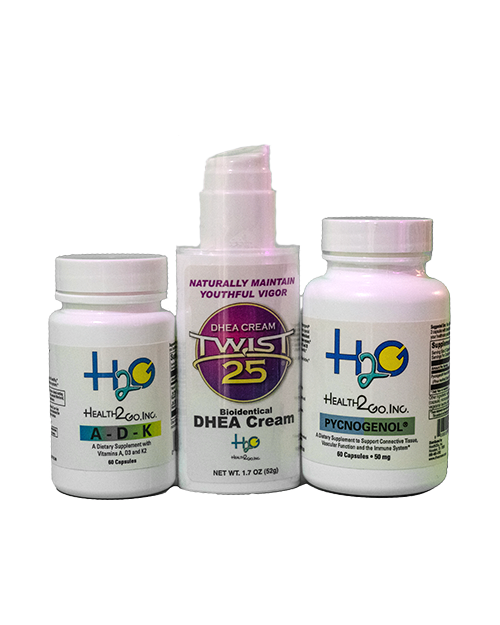
Health2Go Anti-Aging Combo Pack (DHEA, Pycnogenol, Vit ADK)
$137.95 Add to cart -
-